Showing posts with label Films. Show all posts

Saturday, 18 October 2014

Finding Fela


Fela Kuti is a name with much behind it. Forefather of Afrobeat and a widely renowned Nigerian activist, whose legacy has been largely lost in the West. Finding Fela sees documentarian Gibney attempt to alter this failing. The film looks loosely at the convening of the 2009 broadway musical, Fela!, and how it brought the musician's music to the masses - just as the film now continues to do. Through a combination of footage, photographs and intimate interviews with those who knew and were inspired by him, a picture is constructed that acknowledges ever aspect of his world. The complex history of Nigeria, detailing the civil war and the following military regimes that reigned throughout the 60s and 70s, alongside Fela's own life and music. Interweaving all these stories that are so full in their own right is a difficult thing to manipulate without losing the depth of the subjects, but Gibney does so with a sophistication that greatly informs the viewer while still leaving much to explore. 

This is a history marked with violence and hardship, but set to a narrative of Fela's music it is coated with a richness that expresses the joy and the passion of the people of the country. So no longer is this a faceless history or even an unknown place, it is a personal account. The film then hands to the West a glimpse of a world that is perhaps entirely foreign to them. Not only do we play witness to a meticulously sculpted and detailed portrait of a man, a musican, and a visionary but the country that inspired and fuelled him. We discover how Fela's life informed his music, so that his history is laced in the lengthy compositions. To find the man behind the songs you have to look through them, and Gibney does just that, using them as a premise for exploration.

When we think of revolutionaries there are names that reappear - Nelson Mandela, Malcolm x, Che Guevara - these are icons whose legacies have been solidified in history. Finding Fela places Kuti in his rightful place among these, as one of the only men who was brave enough to stand up against the authoritative military regimes of Nigeria. Here we are provided with a history that we should know. Through his music, his strong defiance was expressed in a way that spoke to the masses.  Not only did Fela shape the history of afrobeat, he provided Nigeria with a voice that lives on years past his death. Finding Fela ensures that this continues to happen. Forever live Africa. Forever live afrobeat. The meaning of Fela is now brought to England and people should be urged to witness it. 


Friday, 15 August 2014

Boyhood

Cynical should be my middle name, or so some would say. Even so the writer in me is partial to a bit of romanticism every now and then. When I’m feeling a bit indulgent of the fantasy of relationships, I find that nothing quite encapsulates an ideal like the Before trilogy. Upon hearing that the director behind them, David Linklater, had released a new film the romantic inside me started screaming for a day out.

One of the aspects of Linklater's direction that I find most engaging is his choice to film much of his work in real time. Before Sunset for instance, follows the space of one day - no lapses in time, or gaps in the narrative, just the complete undistracted focus on two people's day together. Boyhood is arguably the most ambitious of Linklater's endeavours to date. Taking 12 years to complete, the film follows one boy's life from the age of 5 to 18. The incredible thing about this is it is again filmed in real time, thus the actor playing the protagonist does indeed age at the same pace as his character. A commitment to a project by the actors and director in equal measure, to know that one film is going to be a time commitment that will absorb the most part of your childhood. If ever there was a true claim at a bildungsroman this is it. 

In an age that glazes over the natural process of ageing as best it can, it is refreshing to see it occur on a large screen with no attempt to hide it. Patricia Arquette and Ethan Hawke who play Mason's parents have both been heralded as sensations in their youth. It may then be considered bold to allow their age to be displayed in such frankness. Though of course, it should be said that such a decision should not be marked as incredible in any way. Hopefully instead of sparking reactions of shock it will better reveal the complete normality of ones physical appearance altering with time. 

Further than the appearance of the film, the delivery by the actors must be noted in itself. To have a character development tied in so closely with the actors themselves seems to be a directorial decision that pays off in great measure. The depth of exploration that occurs throughout the film means that you become emotionally confounded in each of the characters. As an audience we observe Ellar Coltrane's method, playing the lead role of Mason, develop alongside the progression of the movie. Though the focus is primarily on Mason's coming of age, Linklater achieves a scope that reveals the complexities of each character and the overriding dynamic of family life. Perhaps most interesting is the ability to reveal the potential faults that can occur in parenthood, in a way that is not dramatic but rather realistic in a way that can be described most accurately as human. 

For me, the film perhaps sat more closely, as I'm sure it would for a large proportion of the audience. Separated from my mother by cities, we both sat in front of our prospective cinema screens and watched as our own lives were unfolded. The film directly followed the period at which I was growing up, with a soundtrack and cultural references that were reflective of that time. Though nostalgia is something that is not uncommon when engaging with films, at this level it was felt more strongly than I have ever experienced before. The best part then, was that through watching it my own fond memories of childhood were sparked, allowing me to feel much closer to home than I actually was. The biggest achievement of Linklater in my eyes, is that it united the parent's with their children who had now come of age, creating a feeling of recognition on such a vast scale that in the darkness of that screen it could almost be felt echoing in the nods and laughs of remembrance. 


Monday, 21 April 2014

A Woman Needs A Man, Like A Fish Needs A Bicycle: 5 female friendships on film
Gloria Steinem's important words in the world of feminism and one of my favourite phrases. Sure, I acknowledge the I'mportance of the men in my life but for me this more rings of the advocation of independence. As far as dependant relationships go, nothing makes me want to run for the hills more. The suggestion that we are incomplete until we find a partner has my skin crawling. That's why when I came across the BFI article listing seven female friendships in films, it got me thinking about something one of my friends once told me -- you should treat your relationships like your friendships, and your friendships like your relationships. It's the suggestion that you should put more energy into the platonic that is represented in my own list of 5 films in which strong female friendships take the forefront. 

Boys on the Side
My love of Drew Barrymore may enhance my fondness for this film, but that aside the friendships within it are certainly noteworthy. Though there may be some contradiction of Steinem's statement through a favouring of more traditional roles by some of the characters, the point of relying on your friends to get by certainly remains. It is Robin and Jane's friendship that stands strong in the end, displaying how it is often the one you least expect that will support you even at the hardest points.


Frances Ha
One of my all time favourite films, mainly due to Frances doing everything a little bit differently, you can see my full adoration of the film in a previous post. The protagonist clumsily fumbles her way through the narrative but the premise for throwing her off balance is not a man, but her altering relationship with best friend Sophie. For refusing to focus on the romantic side of life, Frances Ha is refreshing. It manages to display how romance is not only found in sexual relationships, but instead comes in a broad scope of possibilities. If the belief is to be held that there is someone out there for everyone, could that someone not be the closest person regardless of their relation to you?


Me Without You
Noted in BFI's list, I couldn't resist sharing this one. The story of two best friends growing up together, this may not be the healthiest example of a relationship but it displays the difficulties of female friendship when it is sparked from a young age. Learning to grow into your own when a friendship is so much of who you are presents a challenge. There is an exploration of how even our friendships have the potential to be dependant to the point of consuming us.


Ghost World
I will always have an attachment to Ghost World for resonating with what it is like to be on the outside. Enid and Rebecca's friendship demonstrates how it is easier to be different if you have someone to accompany you. Revealing the struggle of maintaining a closeness in the inevitable changes following school, through everything it remains that Enid and Rebecca's quips are still unrivalled. 


Death Proof
Tarantino's film may be centred around car chases but female friendships are a pivotal part to the narrative. Beginning with a focus on the light hearted side of things, when a threat is imposed it can be seen how female friendship prevails.


Friday, 18 April 2014

Leon The Professional


It's so easy to get stuck into a rut with blogging. You leave it for a day, then for a week and before you know it a month has gone by and your browser is gathering dust in the corner. That's when it starts to feel like a burden; an ominous presence looming over you. It is in moments such as this that something truly inspiring is needed to shake you out of your slumber. Discovering a film that places itself firmly in your number one spot cannot be disregarded as such an opportunity.

Leon the Professional sees an 11 year old Natalie Portman in her first feature length role, as young Mathilda who is taken in by a hitman after her family are killed. Released in the same year as my birth the likelihood that we were bound to be kindred spirits seemed inevitable, and from the opening credits I knew that I was going to succumb to infatuation immediately. We are met with a wide shot as the camera spans across an expanse of trees, gradually zooming closer through New York streets until we finally find ourselves in Little Italy. There is the feeling that we are floating above the chaos of the city, and as an introductory scene this perfectly encapsulates the nature of the film. 

As the plot suggests this is a narrative that isn't without action, yet it is the spaces in between, much like the opening scene, that make it so worthwhile. The combination of the tranquil soundtrack and the wide panning shots add a degree of peace that allows you to absorb the film properly. Not lost in the more violent scenes, Besson successfully depicts the complexities of the relationship shared by Leon and Mathilda -- enhanced further by the exceptionally understated performances of the actors. There is a consideration for each individual detail of the film, from the way the bead curtains hang as a division between two characters, to the way that Mathilda models herself on Leon down to what she wears. Epitomised in a single line,'I like these calm little moments before the storm', what Luc Besson presents is an exploration of the intricacies found in those moments, and what they offer to the surrounding disorder that refuses to cease in its pervasion of a haphazard life.


Monday, 24 March 2014

Under The Skin


It has been half a week since I went to see Jonathan Glazer's latest film, Under the Skin, and the fact that I feel as unnerved by the feature as I did upon leaving the cinema holds implications for this as a thriller that has earned its place amongst its predecessors. Unsettling from the offset, Glazer's use of distorting close-ups place his directional style as synonymous with Stanley Kubrick's -- yet to compare the film diminishes its idiosyncratic nature. Even upon its conclusion it is hard to pinpoint exactly what has been witnessed, while the motivations behind the piece are left entirely askew. A strong element of the film's mystery certainly lay in viewing it with no prior knowledge of the plot, and so I will refrain from divulging any specific details for fear of hindering the confusion that it manages to encapsulate.


Based on Michael Farber's 2005 novel of the same name, the film stars Scarlett Johansson in a lead role that is defining of her already established career. A script that is sparse, with minimal dialogue, allows Johansson's craft as an actress to become the focal point. Each movement that is taken becomes decidedly deliberate, culminating in a performance that is alluring, threatening and vulnerable in equal measures. Complimented perfectly by a Mica Levi's soundtrack, that is unbearable to the point that it makes Lynch appear forgiving, there is a construction of scenes that end up intensely moving in their pervading emotion.

Set in Glasgow, Glazer's choice to shoot much of the film undercover on real streets strikes a fine line between the surrealist elements of the film with the reality that it simultaneously presents. Placed in an observatory position, an unexpected strangeness is manifested in seeing reality exactly as it appears. The result of being forced to view the world through the protagonist's eyes is disconcerting and proves Glazer's ability to leave the audience without a morsel of comfortability for the duration of the film. The achievement of succeeding in making our own world appear so unfamiliar to us places Under the Skin as a thriller that is certainly deserving of its genre. Through the deep exhalation that occurs upon closing and the realisation that I cannot remember the last time I took a breath, what is left is an experience that is undoubtedly altering. A dismissal of such a vital bodily function as breathing displays how Glazer somehow detaches the audience from humankind in order to create a film that is unapologetically alienating. A remorseless director, he leaves his victims alongside his characters -- suspended in darkness long after the film's conclusion.


Monday, 10 March 2014

The Wonder of The Grand Budapest Hotel


The Grand Budapest Hotel is Wes Anderson’s most ambitious film to date. As it fluctuates at a quick pace through each scene it must be noted how it is through his latest endeavour that Anderson’s talents have fully been realised - here is a clear indication that he has entirely mastered the craftwork of film making. That Anderson constantly approaches his films as an art project is undeniable, the sheer detail that goes into each one, with everything down to the props and costumes being made to the director’s clear specifications; and this one exceeds its predecessors magnificently. The constantly changing and often contrasting landscapes, from the sparse prison walls to the decadence of the hotel, are all sculpted with such close manipulation that there is a desire to absorb every last small detail. As a craft that deserves unhindered appreciation, this is not only the type of film that you must see on a big screen, but one that you will certainly desire to see again and again - I, for one, have already planned to return this week.


If the intricacies of the design of the film are not enough to go on, then the script provides reason enough why this could very possibly be one of Anderson’s greatest films to date, and with a back catalogue of classics it surely must be noteworthy for this. The interjections of blunt and frankly crude humour throughout gives the film an edge that is charming. In a way that can be expected from Anderson it instantly manages to sway you in its direction by striving to gain your sentimental affection. Ralph Fiennes' sharp wit steals the show and keeps the audience on their toes, but there is a further dark humour to the film through its insertion of both unexpected and sometimes grotesque satire that serves to contrast with the beauty of Anderson’s settings. In succeeding to establish relationships within the frantic nature of the script, the film manages to have the sharpness of The Life Aquatic combined with an emotion that is reminiscent of The Royal Tenenbaums. Laced with an element of mystery, played out like a detective story, it is ensured that we are kept on our toes throughout. As if you could ever be concerned, there is no hope of losing concentration here, rather you’re left sitting in an empty theatre with the distinct wish that the film would never end. This is one that will go into the bank of favourites, with a fond attachment already established that I’m sure will only grow with each screening.


Wednesday, 5 March 2014

Only Lovers Left Alive


Vampires - the word usually makes my skin crawl with thoughts of cliches and overzealous teens, but if anyone could be relied on to save the name of a classic of the horror genre then surely Jim Jarmusch would be our man? Well I left the cinema tonight with Only Lovers Left Alive striding into top spot for my favourite film of 2014, and overtaking it is certainly going to be a challenge left only for the brave.

The supernatural aspects of the film form more of an undertone, which allows the other features of Jarmusch's exceptional directorial talents to take centre stage. If subtlety is found in an insertion of humour, mainly taken through clever quips and an underlying wit that adds a level of charm that is hard to resist; then the luxuriance lies in the decadence of the set design and clothing. The immense detail to each scene, with a literal feast for the eyes, creates an immersive experience. Yet, careful in his selection, the depiction is in no way a random accumulation of props. Rather, Jarmusch creates a nod to a history of the art world that culminates as a portrait of many of the great minds that have sculpted our world. Contrasted with an acknowledgement of the affect 'these zombies' have done had on the current state of affairs, there is a recognition of the unattainability of a creative past that has been consumed by a mindless disregard and contamination of the self. 


Though perhaps seemingly indulgent in luxuriant settings, what actually comes across is an understated and modest appreciation of everything manifested around us. It is through such an attentive direction that the characters are able to develop without a possession of overbearing personalities or an excess of lines. What Jarmusch succeeds in doing is allowing the film to breathe and it is through this that its potential is fully realised. What we are ultimately left with is a portrayal that comes together as more of a piece of art in itself than simply an appreciation of the forms. The result is painstakingly beautiful, with each scene somehow stealing away from the glory of the last. 123 minutes are spent in silent awe that seems to nourish the soul with the perfect injection of aesthetically pleasing moments - moments that I cannot speak for anywhere near as close as they can for themselves. This is not only one not to be missed, but one to be valued in its seamless creation of a work of art.


Thursday, 20 February 2014

Her

Returning home from seeing Spike Jonze's latest endeavour Her, starring Joaquin Phoenix alongside Scarlett Johansson as the operating system whom he falls in love with, I am left feeling unsettled. Unnerved by the question of the fate of the technological world, the irony of beginning to write this post on my phone on the bus home, before sending it off into the ether of the internet is not lost on me. So where to begin?

Well I think before I get into the uncomfortable nature of the film some time has to be given to the soundtrack which as far as the romance of the film goes, seems to hold the candle. The majority of the score was written by Arcade Fire and the gentle charm of each piece makes it easy to fall for. There is a lightness to the entire soundtrack which juxtaposes the uncertainty of the narrative. While there may be significant questions as to the sentiment of falling in love with a computer generated voice, the score provides a much simpler backdrop to these overarching concerns. Karen O's addition to the ensemble is dazzling and provides a moment of unclouded relief during which the film is able to act as a romance, without the complications that one would expect of Jonze, if only for a moment.


There is, at least, a comedic edge to Jonze's writing through which we are able to find momentary comfort. It remains that managing to have an entire cinema audience in unanimous hysterics is an achievement in its own right. The direction is also noteworthy, with some scenes shot with a beautiful reflection of the early stages of a relationship, in its luminous exchanges and radiant promises of something beyond human perception.


Despite the suggestion of the film as a romance it is fraught with scepticism to the point where, despite its sentimental surface, it perpetuates an unsettling sense of fear that resonates once it finishes. Bound up in doubts about things of such great magnitude that it is too difficult to grasp them during the running of the film. The fate of mankind is left hanging in this looming world where we are lost in the clutches of technologies that, although seemingly seek to connect us, in fact leave us in a state of inescapable isolation. Although there is a certain beauty to the film, it seems contradicted by its very core. Existing in a technological age, as we sit on buses and pass through streets where we are all sucked into the screens of our phones, there is the question as to whether we've already gone too far - is it possible to come back or is the hope of discovering real human connection dwindling with ever iPhone update?


Thursday, 13 February 2014

An Oversimplification of Her Beauty


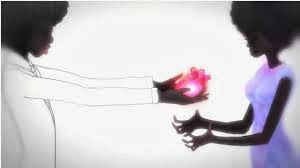
Waking up at 9 in the morning after an unapologetically heavy night to go to the cinema may seem like the work of a martyr, but for a film that is as spectacular as An Oversimplification of Her Beauty the justification is self-evident. The film works as a detailed expression of love, in an innovative form of the more traditional letter or poem. As a declaration, it is set firmly in reality, featuring documented footage of the director's life as well as stagings of past moments. 

With an unshrinking exploration of mixed media that unfolds in an array of stop motion, photography, animation, illustration and film, we are bestowed with a piece of artistic expression that is unfailing in its ability to capture. I was discussing the day before the possibility of literature to provide unheeding escapism, and in a similar loss of your current reality this film is exceptional. Set to a score by Flying Lotus it is instantly captivating.


Throughout the film the remnants of nostalgia trace the edges of the screen and we become aware that we are bearing witness to a person's life. We are presented with an uninhibited representation of who they are - an accumulation of experience and perception, bound up to display a narrative that is instantly engaging with no sign of letting up. It is through its purity that the film manages to avoid gross displays of sentimentality. It is not excessive or over romanticised where films often are because it is securely grounded in truth. Here, it finally becomes convincing to say that we have an honest portrayal of the complexities of love.

It got me thinking about my own perceptions. Those that, although undeveloped, linger constantly. An inherent fear of indulging fleeting desires, both adhered by past experience and present apprehension. Such dictates an unwillingness to ever truly reveal all of myself, safe in the knowledge that small parts will always remain comforted in the disposition of privacy. Aspiring to give off a cool exterior, supposedly unaffected by daily interactions. Meetings with beings that I meanwhile observe as miraculous in their harmonious workings and enchanting exterior. While I become internally filled with the rays that project themselves from my present company, externally cloud blocks recognition of any sign of excess for hope of maintaining a stable impression. Yet then a distance is simultaneously expelled, spurred on by overbearing doubt.


The film's analytical monologue that persists throughout allows such thoughts to manifest intriguingly, acting concurrently with the images on the screen. There are brief moments of simplified humour that ground you securely back in reality, if only for a fleeting second. What we receive is a slight recognition that we have become lost in the indulgence of analysis, so far so that we have become momentarily separated from the present moment. Escapism ingests us without so much as a breath and I for one am glad to have fallen into the unexplored depths of another's mind. 


As the director's inner most thoughts are displayed to me in direct vivaciousness I feel lucky to have been gifted such an honour. To be invited to perceive his vulnerabilities with no attempt to hide behind a translucent wall of fear. There is thus an acknowledgement that we could learn to share more, to be more transparent in our emotions, and to finally take down the shield induced by fear of trust. The risk that we experience may be the most vivid thing that we come to know, for it is in that risk that the possibility of love lies.


Monday, 3 February 2014

The Wolf of Wall Street

For the past few weeks all I have heard about is how good The Wolf of Wall Street is but even so when going to see it I entered with minimal expectations. The charm of big blockbusters has progressively worn off over the years until I have been left with a cynicism which is pretty characteristic of my general outlook on life. So even before starting, the film was set with a difficult challenge at winning me over. 


Laced with humour that becomes almost slapstick at points the film is indeed watchable. I may not be DiCaprio's biggest fan in the world but his performance was undoubtedly impressive. Narrated through his monologue, I found there were echoes of Fear and Loathing in Las Vegas and Trainspotting which are in no way mediocre comparisons to make. It seems my cynicism may well have been hasty.


Now don't get me wrong, I'm not going to start singing the film's praises from the rooftops as seems to be the general consensus and at a running time of 180 minutes I found myself getting restless at points. Yet, if anything Scorsese's portrayal of Wall Street is ballsy. There is little attempt to win over the audience or paint things in any other light than through the excess and greed that is to be expected of an industry that is centred on money. In fact, the ludicrous nature of the entirety of the story leaves you questioning what really must go on behind the closed doors of a stock broker's home. At a time in which the question of how the richest 1% spend their time is certainly relevant, the film is unashamed in its answer. 


There is no sign of heeding and what Scorsese manages to create is a scene that is in no way black and white. The allure of greed that underpins the narrative leaves you unsure of where you stand but that is what ends up being the smartest thing about the film. While it does not attempt to create sympathy for its characters as would commonly be expected, it instead leaves you questioning whether you would have acted any differently in the same situation. 

There is no attempt to humanise the men of the financial world, rather their difference from the ordinary is made blatantly clear throughout, but there is instead a suggestion that we may not be as far from them as we choose to believe. In highlighting such over arching aspects as the materialistic nature that seems to be characteristic of our generation, the film is a success. Although a depiction of one man's story, the focus is instead shifted on to the overall structuring of society and what we are left with is a film with a lot more substance than the ones taken by the characters in it. 


Friday, 31 January 2014

Inside Llewyn Davis


Constant discussion about housing over the past couple of weeks has left me feeling like a bit of a stray cat. I suppose it was then a given that I was going to feel at home watching Inside Llewyn Davis. From early on we find the protagonist, a struggling folk singer named Llewyn, in the company of a cat that he keeps reminding us is not his own. The clear bond that forms between the unlikely pair and the obvious care that Llewyn feels for the cat means that we start to see the resemblance between the two. A sense of loss and helplessness resonates and it is one that certainly sat comfortably with me. Llewyn's feline friend becomes a pivotal part of the film, managing to be one of the main sources of humour and a character that I certainly became quickly attached to.


In fact, the beginning of the film actually ended up being one of my favourite parts. There is a feeling that you have been transported into each scene, as if you are sitting in on someone else's private life. Immediately I was absorbed. We then witness a series of everyday struggles and a depiction of one of those days where everything seems to go wrong, stretching out into much of the film. Yet this monotony is wonderfully broken up by the music - those moments when Llewyn plays are when you really feel everything else fade into the background. It is for this that the film manages to acknowledge the power that music can really have through its ability to make the mundane not only bearable but entirely magnificent.


The film succeeds in being very aware of itself. It manages to poke light fun, creating a string of moments that are ridiculously comical. Justin Timberlake, Adam Driver and leading man Oscar Isaac singing a gimmick song is a particular highlight. It knows when to take itself seriously while simultaneously managing to leave the audience sniggering throughout.


This is definitely one that people who are eager to see everything concluded will hate but that's exactly what I like about the film, it doesn't try to be anything other than itself. It doesn't try to wrap things up in a little bow or fix everything, it just is. It reveals all those pains and frustrations of life and simultaneously those moments of relief that sit complete within themselves - for that, it works perfectly. Finally there is a recognition of the beauty of the world in all its flaws and faults with a series of events that in themselves are in no way extraordinary but which come together to tell a story that really is.


Monday, 13 January 2014

Frances Ha


My favourite film of 2013 came out on DVD last Monday and last night I finally got the chance to sit down and watch it. The film details the life of Frances, a 27 year old dancer living in New York who is struggling with the idea of becoming an adult. Directed by Noah Baumbach, that familiar theme is explored of being unsettled and unfulfilled in life. The difference here to the director's previous work is the undeniable spark of hope that comes through in the film.


Played by Greta Gerwig, Frances dispels an awkward self consciousness which is only emphasised by the situations she is placed within. At a dinner party with other adults she is noticeably aware of herself, which makes for uncomfortable yet reassuring viewing. After a particularly insightful comment, Frances blurts out  'I sound stoned... I'm not stoned' and we are reminded that sometimes it is incredibly hard to take yourself seriously.

The spark of the movie comes from Gerwig's always endearing performance and her brilliant portrayal as her character clumsily fumbles her way through life. Combined with the little bouts of humour that continually pop up throughout the film, it's really hard not to fall in love. Baumbach's direction is beautifully sculpted. Through scenes that are often incredibly brief he manages to perfectly reflect the heroine's own erratic personality.

Certainly, the film is incredibly romanticised. Noah's choice to use solely black and white footage emphasises this. Made in the early stages of Baumbach and Gerwig's own relationship, the lens seems to capture the couple's own private romance. Despite this, one of the reasons I personally adore the film is that it doesn't focus on Frances's relationships with men. Instead this takes a back seat to the more poignant romance between her and her best friend Sophie, who she continually notes is the same person as her but with different hair.


Really I think I see a lot of myself in Frances (although I do have a tendency to project myself on to film characters). Living independently for the first time, as I struggle to go about simple daily tasks I often wonder when I will finally feel like an adult. Perhaps what the film realises is that this never really happens and in reality we are all just fumbling through life. Some of us are just better at pretending we know what we're doing. As Frances notes 'I'm not a real person yet' and a comfort is found in the fact that perhaps no one ever really is.